
Last Updated on 2026-02-18
Washington is one of the few places where a family can stand on a windy Pacific beach, walk under moss-covered rainforest canopy, and end the trip with glacier views and bright turquoise mountain lakes, all without leaving the state. Few road trips offer that kind of range in one continuous route.
This 14-day Washington road trip combines two classic routes, the Olympic Peninsula Loop and the Cascade Loop, with a two-day stop at Mount Rainier. Together, they create one complete itinerary that covers three national parks: Olympic National Park, Mount Rainier National Park, and North Cascades National Park.

This plan is not about cramming in every trail and viewpoint. It is designed to give families a realistic two-week route that keeps driving days manageable, builds in recovery time, and focuses on the stops that tend to feel most rewarding with kids. Instead of rushing, it shows how to connect both loops into one cohesive trip without burning out halfway through.
The itinerary is meant to guide, not overwhelm. Each day has a clear direction and a few meaningful stops, but families do not need to do everything listed. The route can begin anywhere along the loop. This version starts in Seattle because that is how the trip was completed, flying in and traveling in July. The full route took us 12 days on the road, with additional time set aside to explore Seattle before departure.
To fully tailor the experience, review our five companion guides for deeper details, maps, and expanded coverage for each major section of the trip.

14-Day Washington Road Trip Itinerary With Kids
Day 1: Arrive in Seattle, Ferry to Bainbridge Island, Drive to Port Angeles
A Washington road trip feels different when it begins on the water. Taking the ferry from Seattle to Bainbridge Island turns arrival day into part of the adventure. Kids can move around on deck, watch the skyline fade behind them, and look for ferries crossing the sound. It feels less like a travel day and more like a beginning.

After docking in Bainbridge, stop at Pia the Peacekeeper in Sakai Park. The large troll sculpture sits tucked into the woods and is an easy, memorable first stop. The short walk helps everyone reset after travel.
While you can start your trip anywhere along the loop, we completed the trip by flying into Seattle. Therefore
From Bainbridge, drive Highway 101 north along Hood Canal toward Port Angeles. The route is about 73 miles and typically takes 1.5 to 2 hours, depending on stops. This stretch introduces the quiet forests and shoreline views that define the Olympic Peninsula.
Port Angeles makes an excellent base for the next several days. It has conveniences families need, groceries, restaurants, and easy access to Hurricane Ridge, Lake Crescent, and the northern beaches.
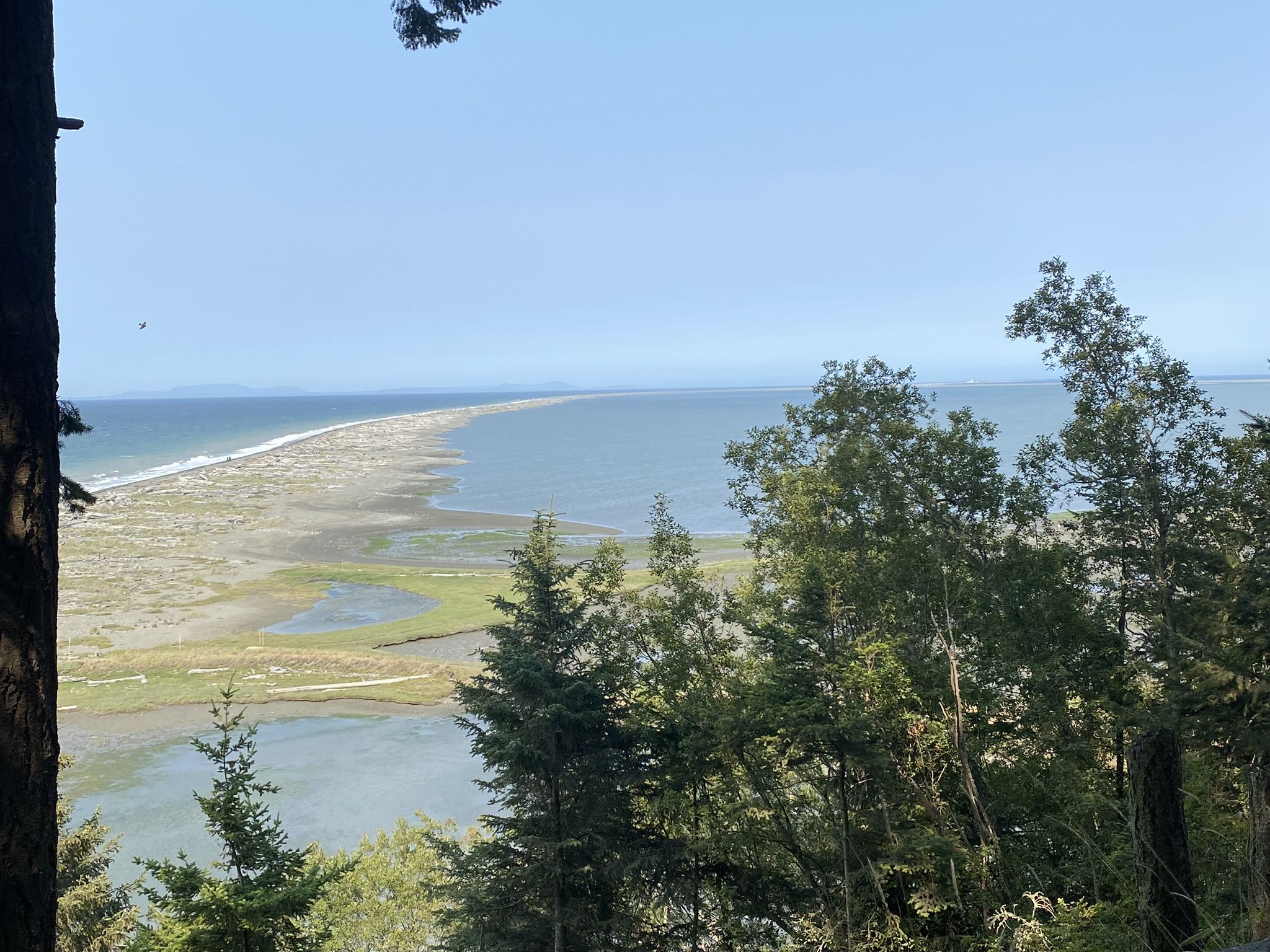
Suggested stop: Dungeness Spit. This long sand spit extends nearly five miles into the Strait of Juan de Fuca and is one of the longest natural sand spits in the United States. Families can walk as far as they like along the wide beach. There is an entrance fee, and longer hikes toward the lighthouse require planning for time and weather.
Good to know: Ferry schedules vary seasonally. If arrival times do not align well, an alternate route includes driving south toward Tacoma and circling around or adjusting the first overnight location.
Schedule change: If you’ve taken a later ferry or are driving from the south, you might want to break this day into two. Look for a hotel in Bremerton, Poulsbo, or Port Townsend (a little bit of a side trip). There is a ferry from Coupeville on Whidbey Island to Port Townsend if you decide to complete this route from a different starting point and order.
Overnight: Port Angeles
Olympic National Park Snapshot
Olympic National Park is one of the most diverse parks in the country. In a single visit, families can explore rugged Pacific beaches, moss-draped temperate rainforest, and mountain viewpoints. The main challenge is distance. The park is spread out, so planning by geographic zones keeps driving manageable. Read our guide to Olympic National Park.
- Best family bases: Port Angeles for the north side, and Forks for beaches and rainforest.
- Most important timing tip: Tidepooling is best at low tide, so plan beach windows first.
- Pacing tip: One beach, one rainforest area, and one easy stop per day usually beats trying to do everything.
Day 2: Hurricane Ridge and Port Angeles
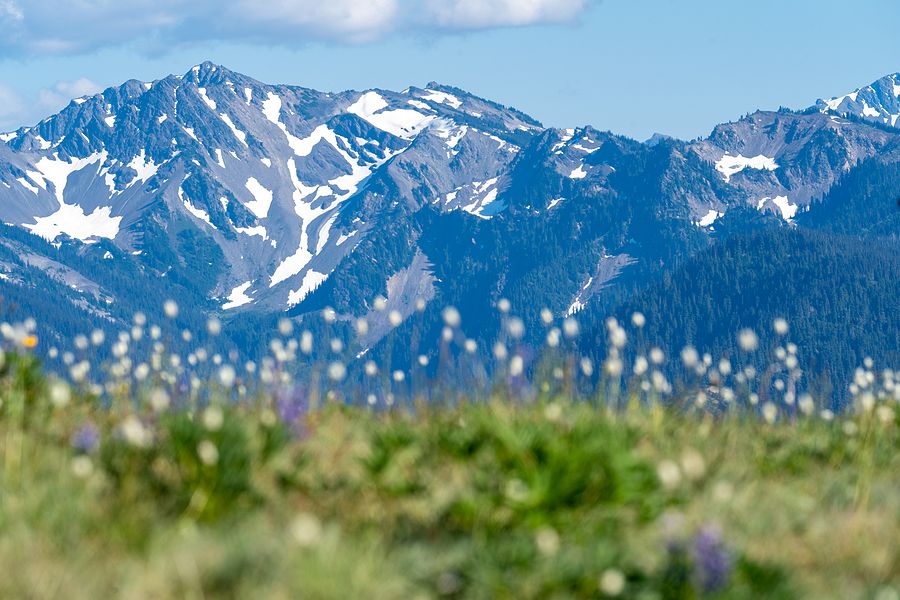
This is often the first true “wow” day of the trip. Hurricane Ridge delivers sweeping mountain views that feel far bigger than the effort required to reach them. Even families who do not consider themselves hikers usually find a short trail here that feels manageable and rewarding.
Start the morning at Hurricane Ridge. On clear days, views stretch across the Olympic Mountains and out toward the Strait of Juan de Fuca. Choose one short trail such as the Hurricane Hill Trail (paved and partially accessible) or simply explore the viewpoints near the visitor center.
Spend the rest of the afternoon exploring Port Angeles. Walk downtown, visit the arcade at Port Angeles Wharf, visit the Olympic Coastal Discovery Center, explore Ediz Hook, or take a whale watching tour.
Don’t miss: Hurricane Ridge on a clear morning. Visibility can change quickly, and early hours often offer the best views and lighter crowds.
Good to know: Hurricane Ridge occasionally requires timed entry or vehicle limits during peak summer season. Check conditions before driving up, and be flexible. If clouds roll in, pivot to Lake Crescent or a waterfall first and return later if skies improve. During 2026, there isn’t a formal, advanced reservation or timed entry system.
Overnight: Port Angeles
Day 3: Lake Crescent and Sol Duc Falls
Day 3 keeps the focus close to Port Angeles while including more forest and water. Activities include one of the park’s most popular waterfalls with a relaxed afternoon beside a glacier-carved lake.
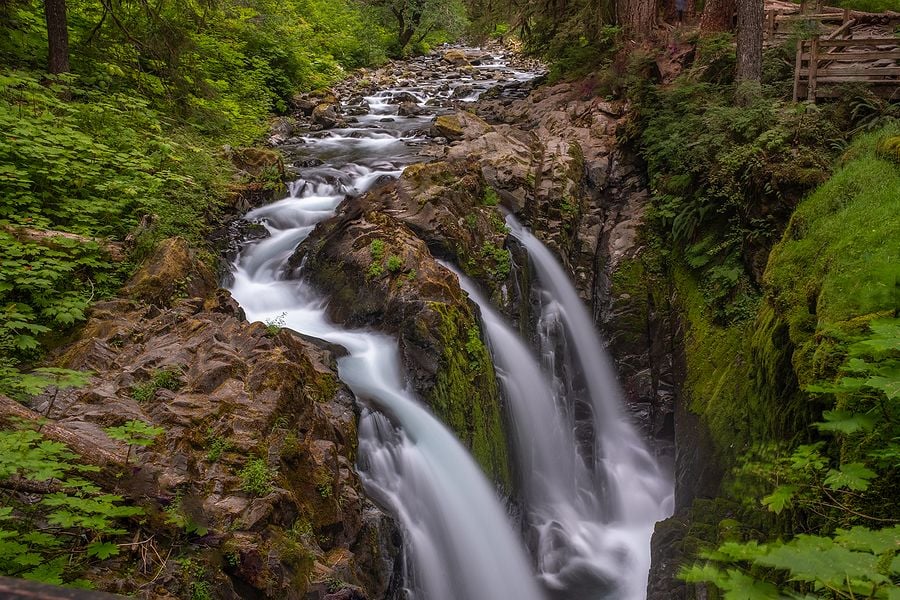
Start early at the Sol Duc area. The very popular Sol Duc Falls Trail is a 1.6-mile round-trip hike through mossy forest that leads to a dramatic multi-channel waterfall. The trail is well-maintained and manageable for most families. Those looking for a longer walk can continue toward Lovers Lane Falls.
If soaking in the Sol Duc Hot Springs is on the list, plan extra time and check current operating hours in advance.
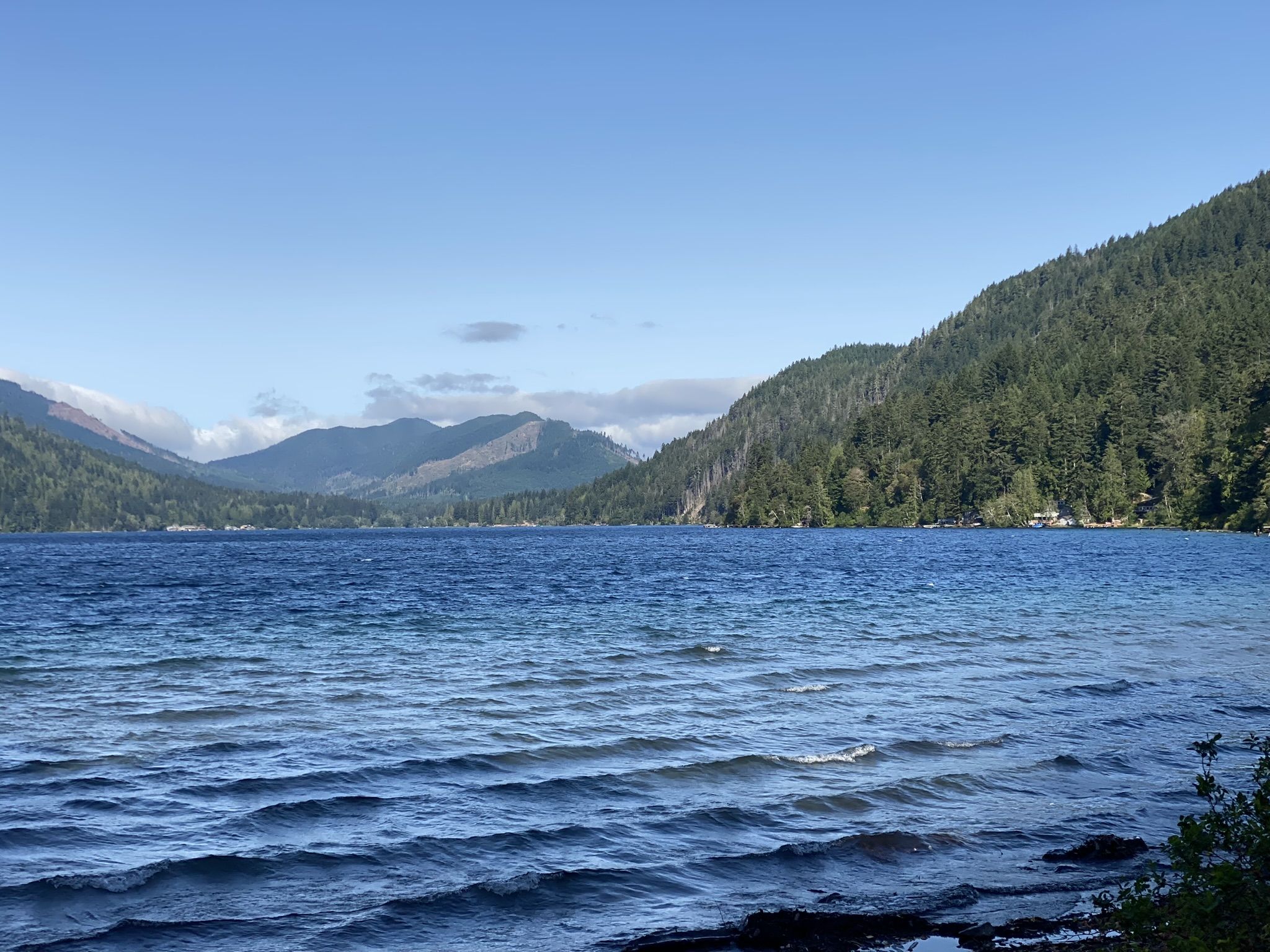
By late morning or early afternoon, shift toward Lake Crescent. This deep, clear lake feels calm and open after the dense forest trails. Picnic along the shoreline, skip rocks, or rent a kayak or canoe from Lake Crescent Lodge for time on the water.
Lake Crescent has eight hiking options ranging from a 0.6-mile loop to a 7.5-mile one-way hike. We suggest hiking the Marymere Falls Trail. This 1.8-mile round-trip trail winds through old-growth forest before climbing slightly to a 90-foot waterfall. The trail is wide and well graded, making it one of the more approachable waterfall hikes in the area.
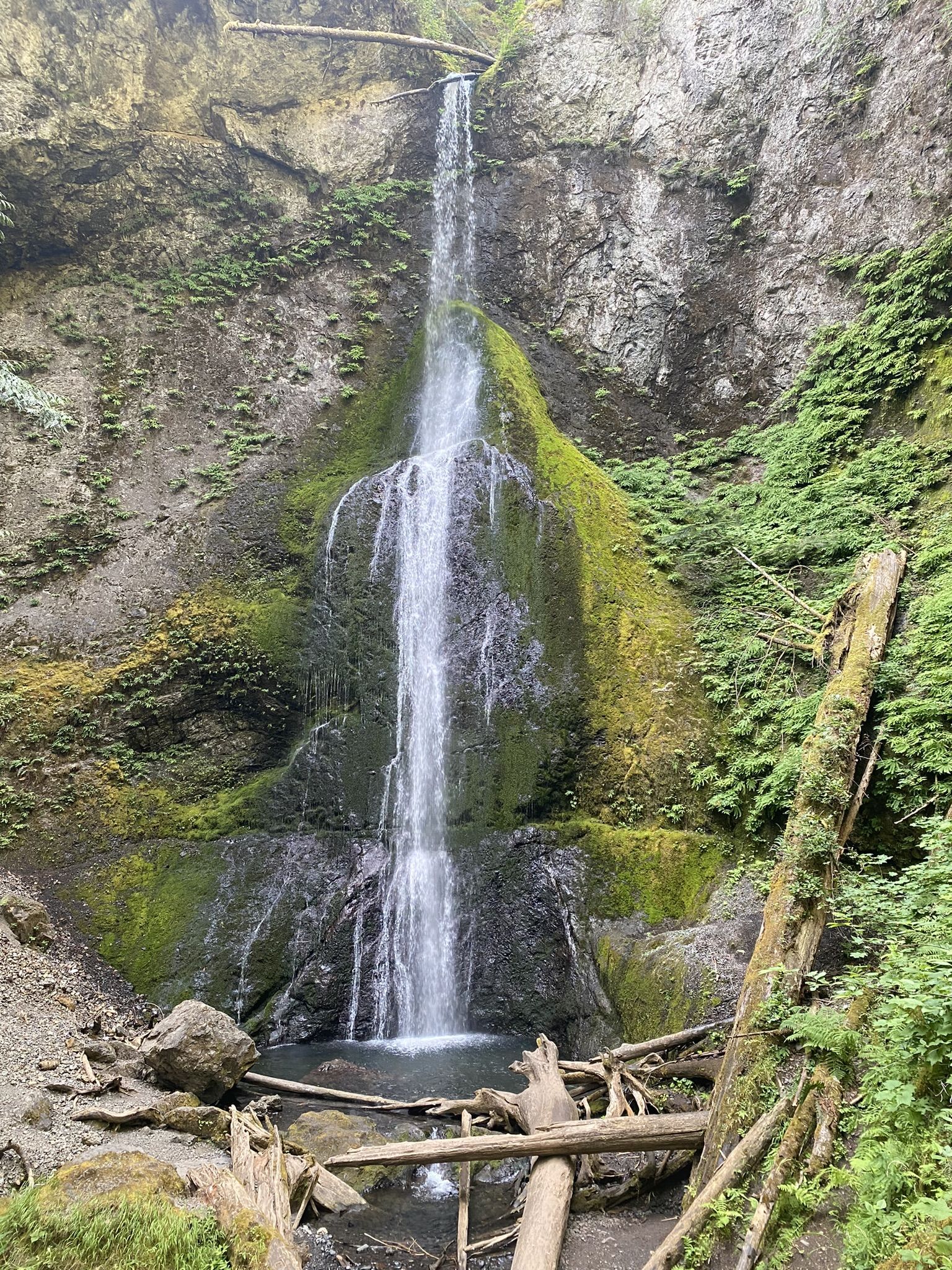
Don’t miss: Marymere Falls. It is one of the most reliable “kids will actually complete this hike” trails near Lake Crescent.
Good to know: Sol Duc Falls is one of the most visited waterfalls in Olympic National Park, and parking can fill early in summer. Arriving in the morning reduces congestion and makes the day feel more relaxed.
Overnight: Port Angeles

Day 4: Neah Bay or Ozette and Shi Shi Beach
Day 4 leans fully into the wild coastal side of Olympic. The scenery shifts again, thicker forest, cooler air, and rugged Pacific views. Families can choose between a scenic driving day with short stops or a longer hike to a remote stretch of coastline.
Option 1 – Strait of Juan de Fuca Scenic Byway to Neah Bay
Drive Highway 112 along the Strait of Juan de Fuca. The road hugs the coastline and offers pull-offs for beachcombing and shoreline walks. Short stops at places like Salt Creek Recreation Area or Clallam Bay Spit provide easy access to the water while breaking up the drive.
Continue to Cape Flattery on the Makah Indian Reservation. A short boardwalk trail leads to dramatic cliffside viewpoints at the northwestern-most point of the contiguous United States. The views feel expansive and powerful, especially on clear days.
If time allows, visit the Makah Cultural and Research Center to learn about the history and traditions of the Makah Tribe.
Option 2 – Ozette and Shi Shi Beach
Head south toward Lake Ozette for a quieter, more immersive hike. The Cape Alava Trail is a three-mile boardwalk through old-growth forest ending on the Pacific coastline. Families can explore tidepools, driftwood-lined beaches, and sea stacks without committing to a full-day trek.
More experienced hikers can extend the walk into the Ozette Triangle or plan the longer 8.8-mile round-trip hike to Shi Shi Beach.
By late afternoon, drive toward Forks. The forest thickens along this stretch, and the shift in scenery signals the transition into the park’s wilder coastal zone. Before settling in, restock groceries in Forks if needed.
Check the sunset time and end your day by watching the sun set at First Beach on the Quileute Reservation, remembering to respect tribal customs during your visit. Allow for travel time between Forks and First Beach.
Don’t miss: Cape Flattery or Cape Alava. Both deliver that “edge of the continent” feeling that makes this stretch memorable.
Good to know: Cape Flattery requires a Makah Recreation Permit, which supports tribal conservation efforts. Tide charts are essential when exploring tidepools along the Ozette coast.
Overnight: Forks
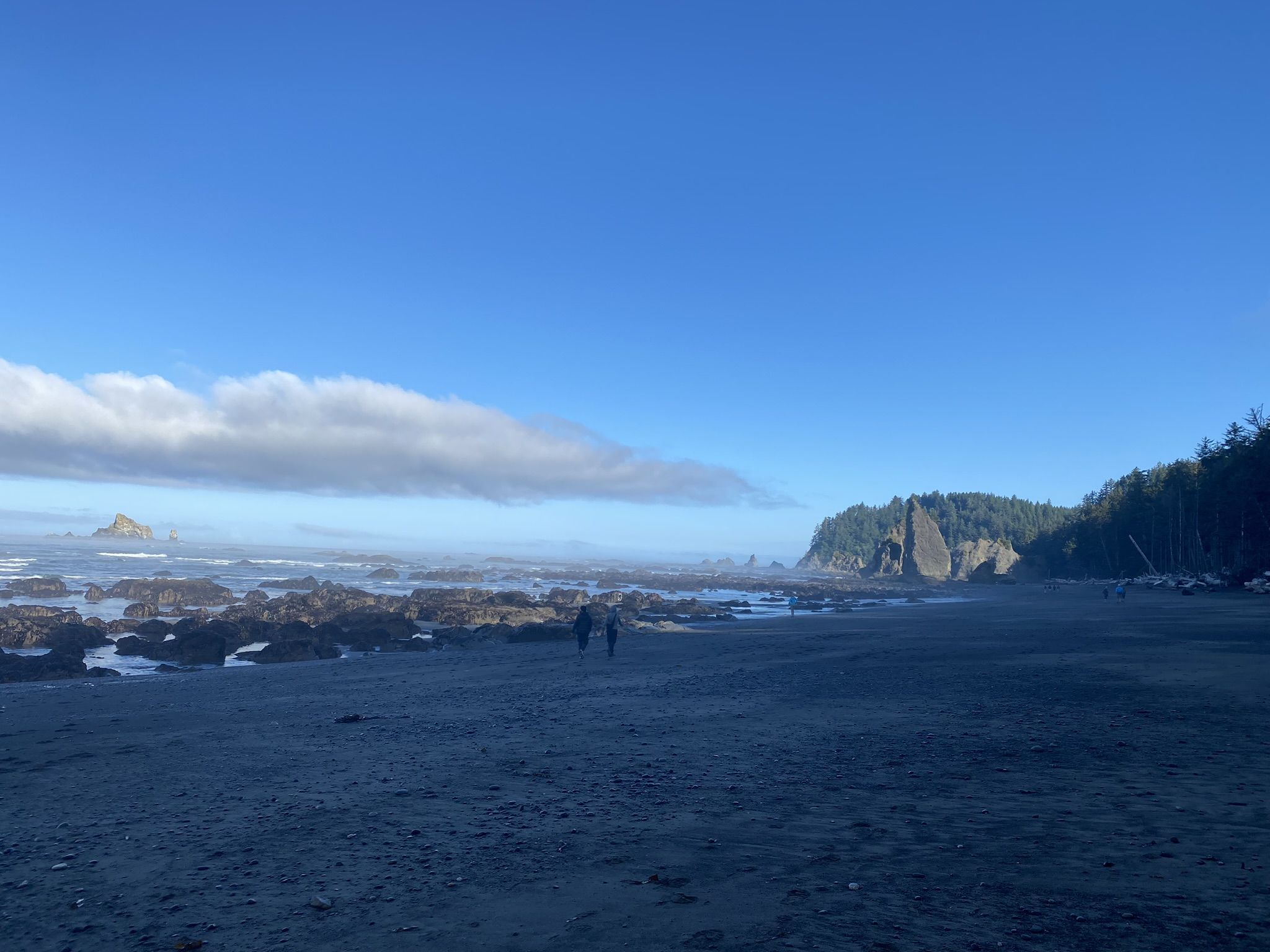
Day 5: Rialto Beach tidepooling + Hoh Rain Forest
Day 3 shifts the scenery again. After mountains and lakes, the Olympic Peninsula reveals one of its most distinctive landscapes: temperate rainforest. The Hoh Rain Forest feels quieter and more enclosed, with moss-draped trees and thick green undergrowth that makes even a short walk feel immersive.

Depending on tide times, you may want to visit the Hoh Rain Forest before heading to the coast for tidepooling. During our visit, we explored the beaches first while the tides were low, then shifted to the forest in the afternoon. This approach let us maximize our tidepooling window without needing to backtrack, making the day feel smoother and more efficient. Always check local tide charts and adjust your route to make the most of both the coastal and forest experiences.
Drive west toward the coast and visit Rialto Beach near La Push. This stretch of shoreline is known for its sea stacks, driftwood, and dramatic waves. Kids often enjoy climbing over large drift logs and searching tide pools at low tide. It feels wild and untamed compared to the calmer lake stops earlier in the trip.
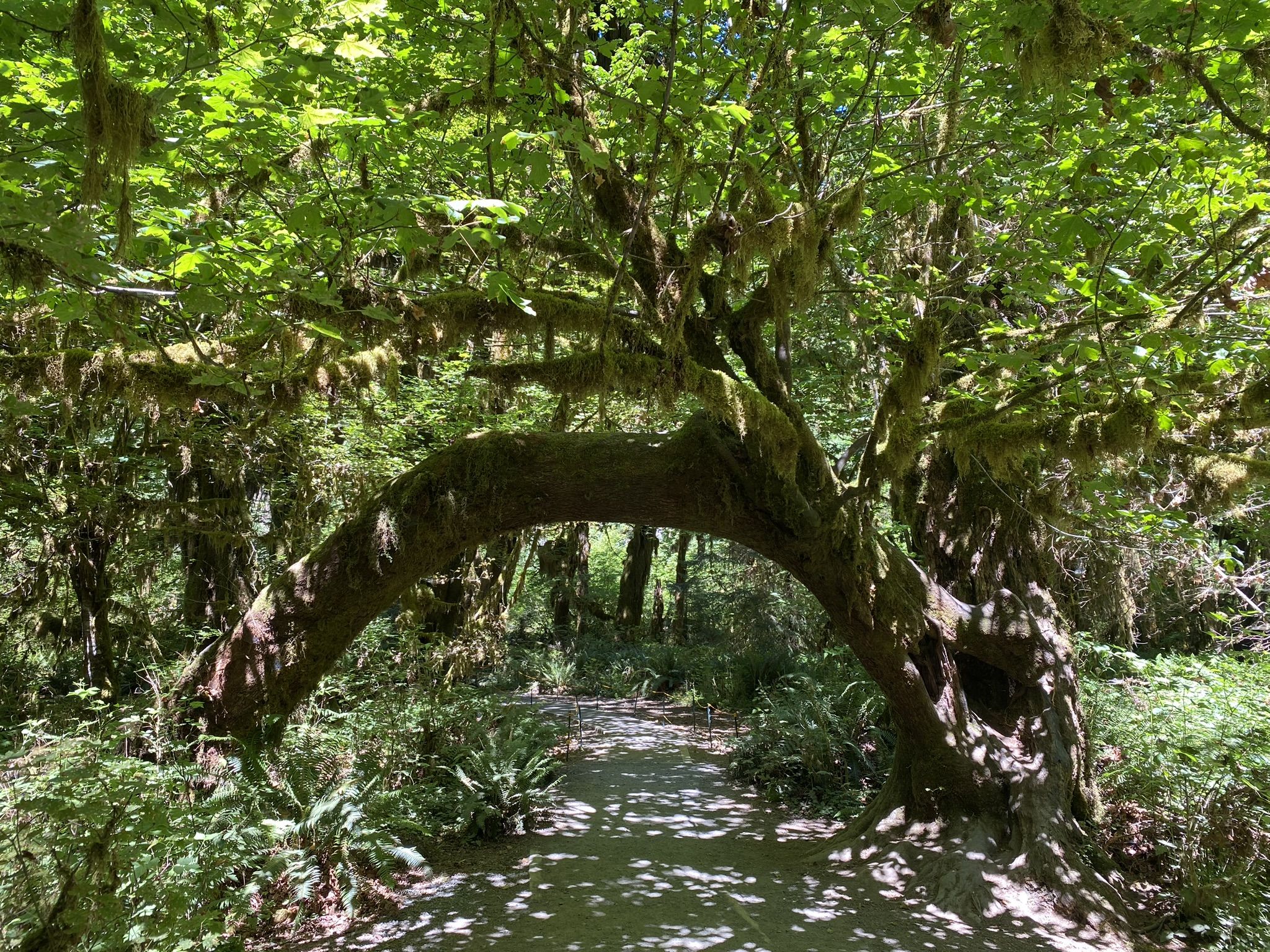
Afterwards, head to Hoh Rain Forest. The Hall of Mosses Trail is an easy loop and one of the most photographed sections of the park. Families looking for a slightly longer walk can continue on the Spruce Nature Trail. Both are manageable and offer the classic rainforest atmosphere without requiring a full-day hike.
Don’t miss: The Hall of Mosses Trail. It is short, accessible for most families, and captures the essence of the Hoh Rain Forest in less than a mile.
Good to know: The road into the Hoh Rain Forest can be slow during peak season, and entrance lines sometimes build in the late morning. Arriving early helps avoid delays. At Rialto Beach, check tide charts before exploring tide pools, and always stay aware of sneaker waves.
Overnight: Forks
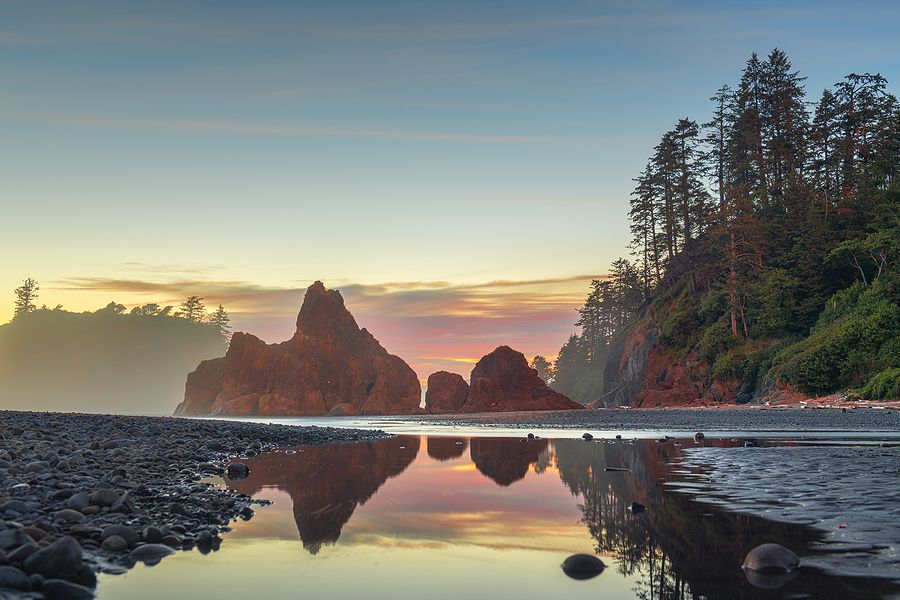
Day 6: Ruby Beach, Beach 4, Quinault Rain Forest, then toward the south side
Day 6 begins to close out the coastal stretch of Olympic. By the end of the day, your family will have experienced beaches, rainforest, and lake country, which keeps the overall loop feeling complete.
Start at Ruby Beach. This is one of the easiest places to experience Olympic’s dramatic coastline. Sea stacks rise just offshore, driftwood lines the beach, and the wide shoreline allows kids to explore without a long hike. Even a short visit here feels worthwhile.
If tide timing works, stop at Beach 4 for tidepooling. It offers another chance to see marine life and adds variety without requiring a full morning.
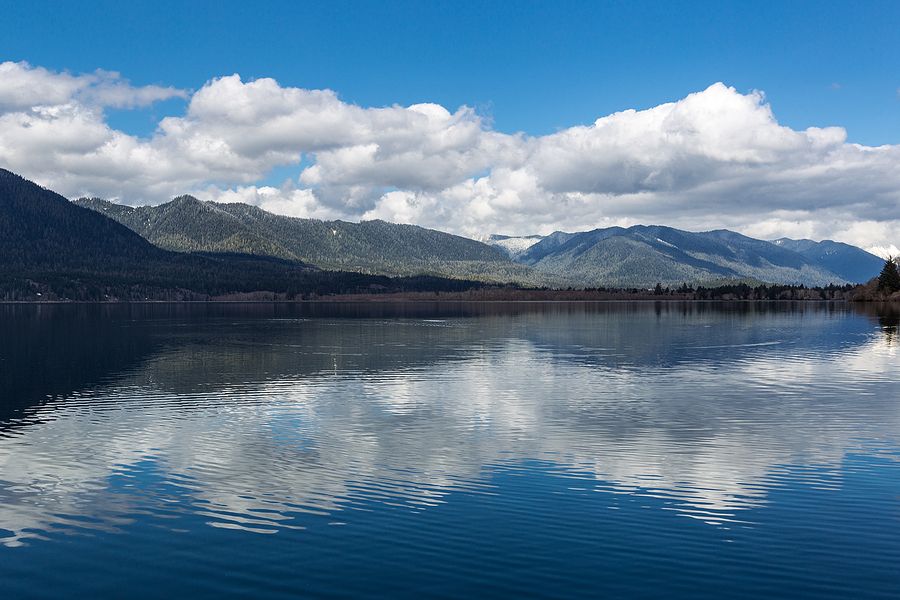
Continue south toward the Quinault Rain Forest area. Short walks to waterfalls or lakeshore viewpoints provide a quieter forest experience compared to the Hoh.
As you drive east toward Ocean Shores or Olympia, the scenery gradually shifts away from rugged coastline and into a softer, lake-and-forest landscape.
Don’t miss: Ruby Beach near golden hour if timing allows. The sea stacks and driftwood create one of the most recognizable coastal views in the park.
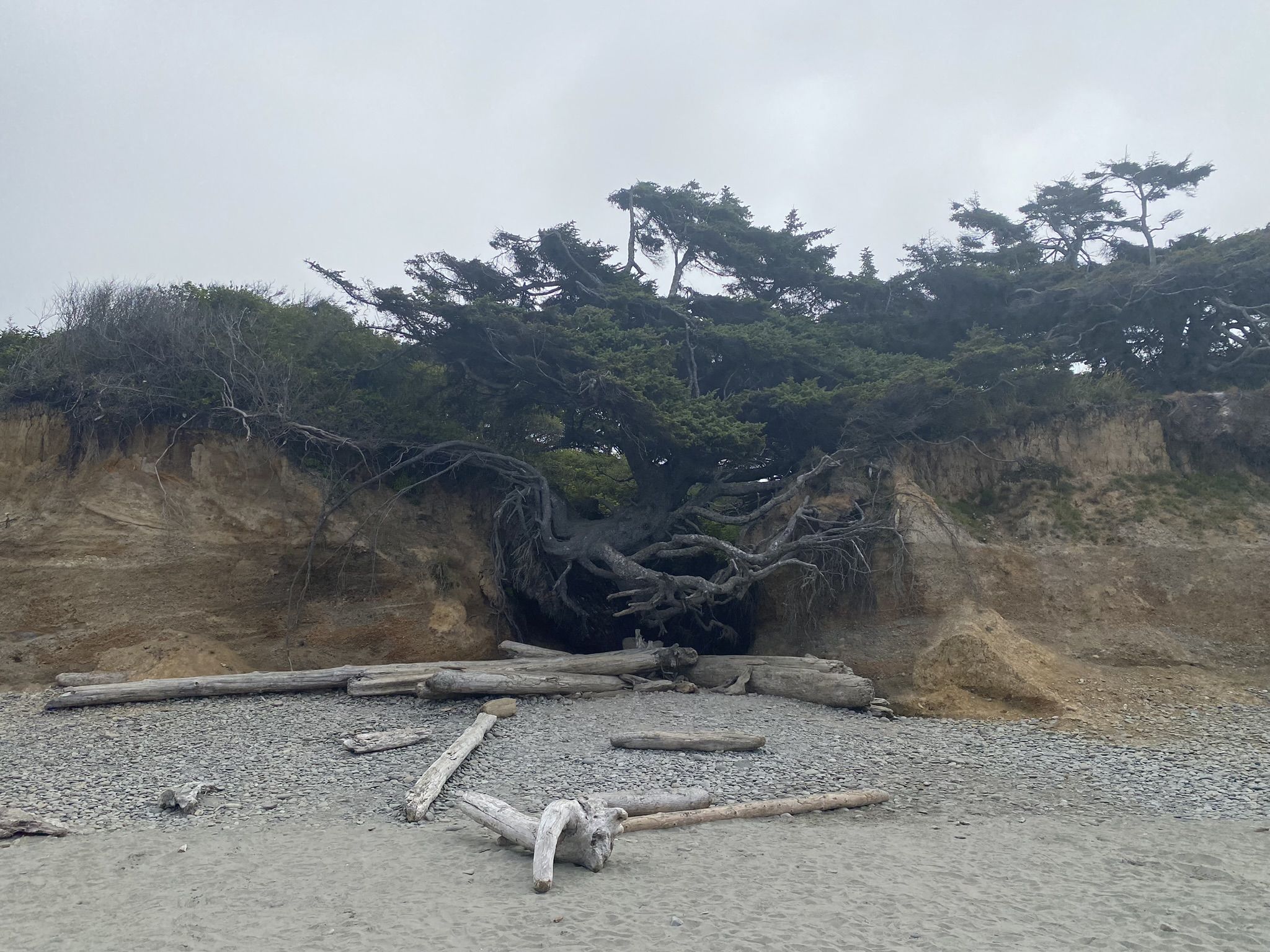
Tip: The Tree of Life near Kalaloch is accessible from a short path and staircase down to the beach. A brief walk to the right reveals the tree clinging dramatically between two eroding cliffs.
Good to know: Beach access points along this stretch can require short but steep paths or staircases. Wear sturdy shoes and allow extra time if traveling with younger kids.
Overnight: Ocean Shores (for a beach evening) or continue toward Olympia to set up Day 7

Day 7: Transition Day and Mount Rainier setup (Toward Packwood)
Day 7 is intentionally lighter. After several full Olympic days, this is a good moment to slow the pace before shifting into Mount Rainier. Think of it as a reset day, restock supplies, shorten drive time tomorrow, and arrive settled rather than rushed.
From Ocean Shores, the drive to Packwood takes about three hours. The route is scenic but straightforward, passing through forested highways and small towns as the landscape gradually transitions toward Mount Rainier’s southern side.
Families who prefer to stretch the day have two flexible options.
One option is spending the morning in Ocean Shores with beach time before driving inland. The wide, sandy shoreline feels different from the rugged Olympic coast and gives kids space to run before returning to mountain scenery.
Another option is stopping in Olympia. Washington’s capital has a walkable waterfront boardwalk, the Hands On Children’s Museum, and casual dining spots that make for an easy midday break. A short visit adds variety without turning the day into another packed itinerary.
The goal is not to add more hiking. It is to arrive in Packwood with energy for Mount Rainier’s bigger viewpoints tomorrow.
Good to know: Stock up on groceries in a larger town before reaching Packwood. Services are limited compared to Port Angeles or Forks, and having snacks ready makes early park mornings much easier.
Overnight: Packwood
Mount Rainier National Park Snapshot
Mount Rainier shifts the energy of the trip. Even families who have seen mountains before tend to pause a little longer here. The best approach is to treat Rainier as two separate park days: one for the Paradise and Longmire corridor, and one for Sunrise. Even when clouds move in, waterfalls and forest trails still deliver. Read our guide to Mount Rainier.
- Best strategy: Divide the park into two zones: Paradise/Longmire on one day and Sunrise on another to reduce backtracking and increase chances of seeing Mount Rainier’s peak.
- Keep hikes short: One short, high-reward trail plus scenic stops is often the best family balance.
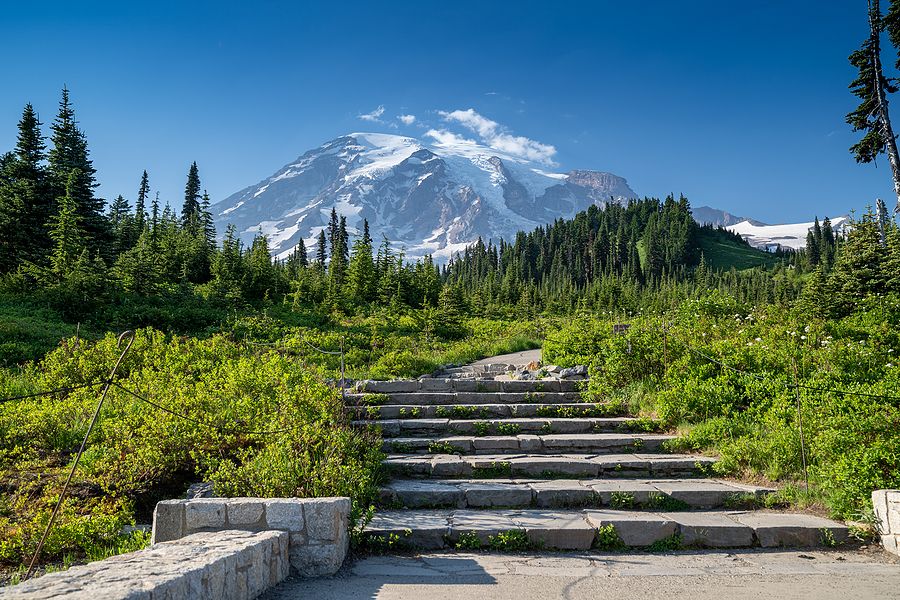
Day 8: Mount Rainier (Longmire, Paradise, Stevens Canyon, Ohanapecosh)
Mount Rainier shifts the energy of the trip again. The mountain feels bigger and more vertical than anything on the Olympic Peninsula. The key to enjoying this day is treating it as a sequence of scenic hubs.
Begin on the south side at Longmire, a historic district with easy river access and short nature trails. It is a gentle start before heading into higher elevations.
Continue to Paradise, the centerpiece of the park. On clear days, this is where the scale of Rainier becomes undeniable. Choose one short trail such as the Nisqually Vista Trail or explore the Paradise area meadows. The goal is one meaningful walk, not an endurance test.
From Paradise, follow Stevens Canyon Road, stopping at Christine Falls and Narada Falls for quick waterfall views without long hikes. If skies are clear, pause at Reflection Lakes for classic mountain views.
End the day in the quieter forested area of Ohanapecosh. Short river or forest walks here provide a calmer finish after the busier Paradise section.
Best stops: Longmire, one Paradise trail, Narada Falls, Reflection Lakes (if visible), and a short Ohanapecosh walk.
Good to know: Paradise may require timed-entry reservations during peak summer (no requirements in 2026). Arriving early reduces congestion and increases the chance of clear mountain views before afternoon clouds build.
Overnight: Packwood

Day 9: Mount Rainier (Sunrise, Tipsoo Lake), Snoqualmie Falls, then to Everett
Day 9 moves to the higher elevation side of Mount Rainier. The Sunrise area feels more alpine and open, with sweeping views, subalpine meadows, and wide skies. It offers a different experience than Paradise and rounds out the Rainier portion of the trip.
Begin with a stop at Tipsoo Lake near Chinook Pass. The flat loop around the lake is short and scenic, and on clear days it reflects Continue to Sunrise, the highest point accessible by car in Mount Rainier National Park. Explore the visitor center area and choose one manageable trail. Families often enjoy a portion of the Emmons Vista Trail or a section of the Naches Peak Loop, depending on energy and weather..
After finishing at Sunrise, begin the transition toward the Cascade Loop. Drive west and stop at Snoqualmie Falls, one of Washington’s most well-known waterfalls. The short walk to the main viewpoint provides a dramatic 268-foot waterfall without requiring a hike.
By late afternoon, continue toward Everett or Leavenworth to set up the Cascade Loop portion of the trip.
Don’t miss: Tipsoo Lake. It offers one of the easiest alpine experiences in the park and is especially beautiful in wildflower season.
Good to know: Sunrise is typically open seasonally due to snow. Check road conditions before planning this day, and expect cooler temperatures at higher elevation even in summer.
Schedule change: Here you have an option to shorten this trip. Instead of starting the Cascade Loop in Everett, you can drive from Mount Rainier’s Sunrise Visitor Center to Leavenworth and pick up the route on day 11.
Overnight: Everett (to begin the Cascade Loop the next morning) or Leavenworth (to shorten tomorrow’s drive)

Day 10: Start the Cascade Loop (Everett to Leavenworth to Wenatchee area)
Day 10 officially begins the Cascade Loop. The scenery shifts from coastal forests to river valleys and mountain passes, and the drive itself becomes part of the experience.
If starting in Everett, consider a quick stop at Jetty Island or the Imagine Children’s Museum before heading inland. Families beginning in Leavenworth can simply enjoy a slower morning and start the drive east.
From Everett, follow Highway 2 through Monroe and into the Skykomish River Valley. This stretch gradually transitions from farmland to dense forest as the road climbs toward Stevens Pass.
Along the way, stop at one or two scenic pullouts rather than trying to see everything. Wallace Falls State Park offers accessible waterfall trails, while short viewpoints near Stevens Pass deliver sweeping mountain scenery without long hikes.
Descending into Leavenworth, the landscape opens into a river valley framed by rugged peaks. The town’s Bavarian-style buildings, riverside parks, and walkable streets make it an easy place to slow down. Families can explore Waterfront Park or stroll through town without needing a full activity plan.
If continuing to Wenatchee, the drive becomes more open and sunlit as the terrain shifts into the Columbia River Valley.
Don’t miss: A stop in Leavenworth’s Waterfront Park. It offers mountain views, river access, and space for kids to move around after a scenic drive.
Good to know: Traffic can be very heavy through Leavenworth. We recommend parking in lots on the right hand side so you don’t have to try to cross traffic when you leave.
Don’t miss: Snohomish Falls between Mt Rainier and the Cascade Loop
Overnight: Leavenworth or Wenatchee

Day 11: Wenatchee area to Methow Valley (Chelan option, then Twisp or Winthrop)
Day 11 continues the Cascade Loop east and north, shifting into drier terrain and wide river valleys. Forested mountains give way to open hillsides, orchards, and the deep blue water of Lake Chelan.
From Wenatchee, drive north along Highway 97A toward Lake Chelan. The lake stretches for more than 50 miles and feels unexpectedly large compared to the alpine lakes earlier in the trip. Stop at a lakeside park or public access point for a short walk, picnic, or time near the water.
Continue through the small town of Chelan, then head north toward the Methow Valley. The road climbs gradually and becomes quieter as it approaches Twisp and Winthrop.
Winthrop’s western-themed downtown is compact and walkable. Wooden boardwalks, ice cream shops, and river views make it a relaxed stop after a longer drive. Families do not need a full activity plan here. A simple walk through town and along the river is enough to enjoy the atmosphere.
This portion of the Cascade Loop feels less crowded and more spacious than earlier stops, which makes it a good mental reset before entering North Cascades National Park tomorrow.
Don’t miss: A lakeside stop along Lake Chelan. Even a short visit gives the day variety and breaks up the drive.
Good to know: Services become more limited north of Chelan. Fill gas tanks and restock snacks before heading toward Winthrop.
Overnight: Winthrop
North Cascades National Park Snapshot
North Cascades National Park often surprises families. It feels remote and dramatic, yet many of the best viewpoints require little hiking. The key planning factor is seasonal access and shifting mountain conditions. Build the day around a few reliable stops and treat anything extra as a bonus. Read our guide to North Cascades National Park.
- How families experience it: Scenic stops along Highway 20, with quick pullouts and short forest walks.
- Plan around conditions: Seasonal road openings and changing weather can affect access. Always check current conditions before departure.
- Pacing tip: Focus on overlooks and shorter trails rather than committing to long hikes. The scenery does most of the work here.

Day 12: North Cascades crossing day (Winthrop to Newhalem, then to Burlington)
Day 12 may be the most visually dramatic drive of the entire loop. Highway 20 cuts through jagged peaks, deep valleys, and turquoise reservoirs that look almost unreal on clear days.
Leave Winthrop and drive west along the North Cascades Highway. The scenery shifts quickly as the road climbs toward Washington Pass. Stop at the Washington Pass Overlook for one of the best panoramic viewpoints in the state. The short paved walk leads to a dramatic cliffside platform with sweeping views of Liberty Bell Mountain and the surrounding peaks.
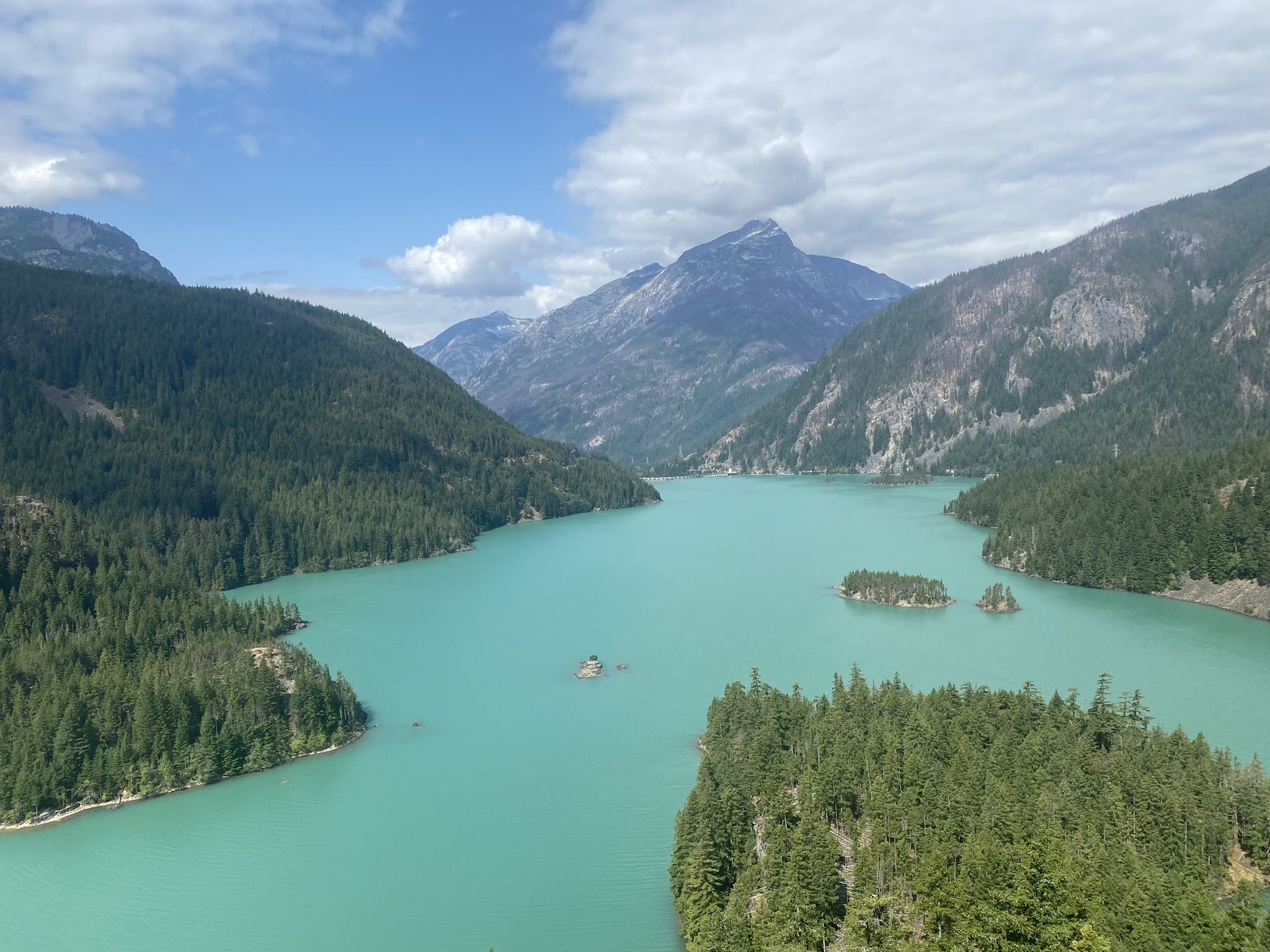
Continue west toward Diablo Lake. The vivid blue-green color comes from glacial silt suspended in the water. Stop at the Diablo Lake Overlook for the classic viewpoint, then continue to the North Cascades Visitor Center in Newhalem for short riverside trails or a break from the car.
Unlike earlier days, this stretch is about the drive itself. Pull over at designated viewpoints rather than trying to fit in multiple hikes. The scale of the mountains makes even short stops feel significant.
Don’t miss: The Diablo Lake Overlook. On a clear day, it is one of the most photographed views in Washington.
Good to know: Services are limited between Winthrop and Marblemount. Fuel up before leaving town. Weather can shift quickly at higher elevations, and snow can linger into early summer at Washington Pass.
Overnight: Burlington

Day 13: Whidbey Island scenic drive (Deception Pass, forts, lighthouses), overnight in Anacortes
On day 13, the road gradually descends into farmland, river valleys, and coastal lowlands. It feels like a gentle landing after several mountain days.
From Marblemount or Burlington, drive west through the Skagit Valley. The landscape opens into farmland and river flats before reaching the coast. Continue toward Deception Pass, where the bridge connects Fidalgo Island to Whidbey Island. The views from the bridge are among the most recognizable in Washington, with turquoise water rushing beneath dramatic cliffs.
Stop at Deception Pass State Park for a short shoreline walk or a viewpoint stop. Trails here range from quick overlooks to longer forest loops, but even a brief stop captures the feel of the area.
Continue south along Whidbey Island. Small towns like Oak Harbor, Coupeville, and Langley provide walkable streets and waterfront views. The drive itself becomes the highlight as the journey includes several state parks, bluffs, and quiet inlets.
By late afternoon, take the ferry from Clinton to Mukilteo to continue south toward Seattle to complete the road trip. Or you can add a day by returning to Anacortes or Burlington to schedule a day to Friday Harbor.
Don’t miss: Deception Pass. Even a short stop delivers iconic views and gives the Cascade Loop a memorable finish.
Good to know: Ferry wait times between Clinton and Mukilteo can vary, especially on summer weekends. Check schedules in advance and allow buffer time if you have travel plans the next day.
Overnight: Unfortunately, Anacortes does not have any big family friendly hotels. Stay again in Burlington, a 20-25 minute drive.

Day 14: Friday Harbor or Completing the Loop to Seattle
The final day can be relaxed or celebratory, depending on energy levels. After mountains, rainforests, and coastal drives, an island visit feels like a fitting finale. The slower pace, boats in the harbor, and walkable streets give the trip a sense of completion.
If an island day is on the wish list, take the ferry to Friday Harbor on San Juan Island. The town is compact and easy to explore on foot. Walk the marina, browse small shops, grab lunch near the docks, and enjoy the waterfront views.
If you plan to stay primarily in town, consider walking on to the ferry rather than bringing your car. Walk-on passengers board faster, avoid long vehicle lines, and can still experience the harbor, whale museum, and shoreline paths without driving.
Families who choose to bring a car can explore more of the island, including Lime Kiln Point State Park for coastal views or Roche Harbor for a quieter marina setting. Just keep expectations realistic. Ferry schedules shape the day, and long vehicle lines can be stressful if not planned carefully.
End your day by heading to Seattle to close the double loop route or start your journey back home.
Don’t miss: Keeping Friday Harbor simple and walkable. The charm of the marina and downtown often feels more memorable than trying to drive the entire island in one day.
Good to know: Ferry reservations and wait times vary by season. Check sailing schedules in advance and allow buffer time, especially during summer weekends.
Optional Trip Extensions
This two-loop itinerary already covers a wide range of Washington landscapes. For families with extra time, or those who prefer to slow the pace in one region, these extensions allow you to customize the trip without redesigning the entire route.
Add More Time in Olympic National Park
If the Olympic Peninsula feels like the highlight, consider adding:
- A second coastal beach day near La Push
- A longer rainforest hike beyond Hall of Mosses
- An overnight in Quinault for a quieter forest experience
- A guided sea kayaking or whale-watching excursion
Olympic’s variety makes it easy to extend without adding long drives.
Add More Time at Mount Rainier
Mount Rainier rewards slower exploration, especially in summer wildflower season. Possible additions include:
- A longer Paradise hike
- Exploring Grove of the Patriarchs (if open)
- Sunrise wildflower walks
- Extra time at Reflection Lakes at sunset
If mountain scenery feels like the highlight of your trip, this is where an extra day pays off.
Add a Leavenworth or Lake Chelan Overnight
If the Cascade Loop portion feels rushed, consider slowing down in one of these areas:
- A second night in Leavenworth for river time and relaxed town exploring
- A full day on Lake Chelan for swimming or a boat rental
This section of the drive offers a different climate and pace compared to the coastal half of the trip.
Focus on the San Juan Islands
Instead of a Day 14 visit only, add an overnight stay or a second island like Orcas Island. This allows time for:
- Whale watching tours
- Lighthouse walks
- Tidepool exploration
An overnight removes the pressure of ferry timing and makes the island portion feel intentional rather than rushed.
Add Seattle Exploration at the Beginning or End
If urban experiences are important to your family, add one or two nights in Seattle to explore:
- Pike Place Market
- Space Needle
- Seattle waterfront

Tips for Planning a Washington Double Loop Road Trip
- Plan around drive time, not just distance: Mountain roads, ferry schedules, and scenic pull-offs all slow travel more than expected. A three-hour drive can easily become four once stops are included. Build margin into each day and avoid stacking multiple long hikes in the same afternoon.
- Check seasonal road and reservation requirements: Conditions change throughout the year and can affect access.
- Sunrise and parts of Mount Rainier open seasonally due to snow.
- Paradise may require timed entry during peak summer months.
- North Cascades Highway can close seasonally.
- Some ferry routes require reservations or early vehicle arrival.
- Fuel up when you can: Gas stations are limited between major towns, especially between Winthrop and Marblemount and along stretches of the Olympic Peninsula. Do not assume the next stop will have services.
- Respect tide charts on the coast: Low tide reveals tidepools and wider beaches at places like Rialto, Ruby Beach, and Shi Shi. Always check tide charts before exploring and remain aware of sneaker waves.
- Expect weather variation: You may experience cool rainforest mornings, warm afternoons near Lake Chelan, and windy alpine conditions at Sunrise within the same week. Pack layers even in summer.
- Choose one main stop per zone: Each region includes multiple highlights. Instead of trying to see everything, select one meaningful stop per area to keep the pace steady and manageable.
- Book lodging early: Summer is peak season across Washington’s national parks and ferry routes. Reserve accommodations well in advance in Port Angeles, Forks, Packwood, Leavenworth, and Winthrop.
- Keep ferry days simple: Buy tickets online.
- Built in recovery time: This itinerary includes transition days for a reason. Olympic and Rainier reward early starts, and a lighter afternoon often improves the overall experience.
- Let the landscape lead: The strength of this two-loop route is variety. Beaches, rainforest, alpine lakes, river valleys, and island towns all feel different. Lean into the contrast rather than trying to compare each stop.
Approximate Drive Times by Day
Drive times are estimates under normal summer conditions and do not include scenic stops, traffic delays, or ferry wait times.
| Day | Route | Approximate Drive Time |
|---|---|---|
| Day 1 | Seattle to Port Angeles (via Bainbridge ferry) | 2.5–3 hours (including ferry crossing) |
| Day 2 | Port Angeles to Hurricane Ridge and Lake Crescent | 1–2 hours total driving |
| Day 3 | Port Angeles to Sol Duc and Lake Crescent | 1.5–2 hours total driving |
| Day 4 | Port Angeles to Neah Bay or Ozette to Forks | 3–4 hours depending on route |
| Day 5 | Forks to Hoh Rain Forest and Rialto Beach | 2–3 hours total driving |
| Day 6 | Forks to Quinault to Ocean Shores or Olympia | 3–4 hours |
| Day 7 | Ocean Shores/Olympia to Packwood | 2.5–3 hours |
| Day 8 | Packwood through Mount Rainier (Longmire to Paradise to Ohanapecosh) | 2–3 hours total driving |
| Day 9 | Packwood to Sunrise to Everett/Leavenworth | 4–5 hours |
| Day 10 | Everett to Leavenworth to Wenatchee | 3–4 hours |
| Day 11 | Wenatchee to Lake Chelan to Winthrop | 3–4 hours |
| Day 12 | Winthrop to Diablo Lake to Burlington | 2.5–3.5 hours |
| Day 13 | Burlington to Anacortes to Whidbey Island to Burlington | 2–3 hours |
| Day 14 | Burlington to Friday Harbor (ferry) to Seattle | Varies (ferry schedule dependent, 3–6+ hours total) |
Where to Stay as a Big Family
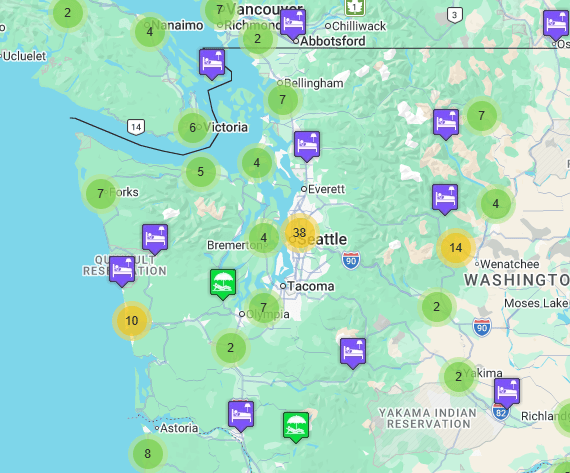
- We list hotels for families of 5 or 6 along the double road trip loop. However, hotels for families of 7 or more are harder to find. Click the map to explore hotels along the route.
- Vacation rentals can also be challenging to find. We suggest trying Whimstay or VRBO.

