
Last Updated on 2026-04-08
The drive through the Florida Keys is one of the most memorable road trips in the United States. The Overseas Highway (U.S. Route 1) stretches across open water, linking a chain of keys that feels worlds away from mainland Florida. Bridges leap across turquoise channels, fishing boats drift in the distance, and every key offers fun family activities to enjoy.

The direct drive from Key Largo to Key West takes about 2.5 hours without stopping, but you’ll find a lot to see along the way. Each key along the route has its own personality, with wildlife refuges, coral reefs, beaches, and small marinas that add to the journey’s fun. Treat the Overseas Highway like a series of short adventures rather than one long drive.
This guide highlights the best stops across five key areas of the Florida Keys: Key Largo, Islamorada, Marathon, Big Pine Key, and Key West. We include a three-day itinerary based on our visit to help you plan the drive while leaving room for spontaneous stops along the way.
While visiting South Florida’s national parks, this road trip fit naturally into our schedule. The drive connects the mainland with the Florida Keys and ends in Key West, with optional access to Dry Tortugas National Park. We enjoyed the different vibe of each key. Since Key West is usually the main destination of the drive, we’ll explore it further in another article.

Overseas Highway, Florida Keys Drive Distances
Travel times along the Overseas Highway from Miami to Key West can vary depending on traffic, bridge openings, and sightseeing stops. The distances below provide a general planning guide for the drive from the mainland to Key West.
| Route Segment | Distance | Typical Drive Time | Notes |
|---|---|---|---|
| Miami to Key Largo | 65 miles | 1 hr 15 min | Gateway to the Florida Keys |
| Key Largo to Islamorada | 17 miles | 25 min | Upper Keys coral reef region |
| Islamorada to Marathon | 30 miles | 40 min | Popular stop for tarpon feeding and reef tours |
| Marathon to Big Pine Key | 30 miles | 45 min | Watch for Key deer along the roadside |
| Big Pine Key to Key West | 30 miles | 45 min | Includes views near the Seven Mile Bridge |
| Miami to Key West | 165 miles | ~4 hours | Actual travel time is longer with stops |

Key Largo
Key Largo is the first key you reach when entering the Florida Keys, and an easy place to start exploring. It is known for its coral reefs, marine wildlife, and wide range of water activities. Many families begin their trip here because it offers a good introduction to the ecosystem that defines the entire key chain.
At about 33 miles long, Key Largo is the largest key in the Upper Keys. It is often called the “Diving Capital of the World” thanks to its location next to the only living coral reef system in the continental United States. Eco-tourism plays a big role here, with state parks, wildlife centers, and guided snorkeling and diving trips available throughout the year.

Top Key Largo Stops with Kids
John Pennekamp Coral Reef State Park: This protected reef system offers snorkeling, scuba diving, glass-bottom boat tours, and kayaking through mangrove channels. The visitor center is worth visiting before heading to the beach or booking a boat tour. Inside, a large 30,000-gallon aquarium with reef fish helps kids understand what they may see underwater later in the trip. Short exhibits explain the Keys reef ecosystem, and a small theater shows films about the marine life and conservation efforts that protect this area. The park is also home to the famous “Christ of the Abyss” underwater statue, one of the most photographed dive sites in the Florida Keys.
Tips: Be sure to download a park map ahead of time or ask for one at the ranger station when you enter the park. Maps are not automatically given with your park entrance receipt. If you plan to take the popular 2.5-hour glass-bottom boat tour, reserve your spot and check the schedule well before your trip since tours can sell out during busy travel seasons. We spent time at both Cannon Beach and Far Beach. Cannon Beach is the larger and more well-known stop, while Far Beach is smaller and tends to be quieter. This stop surprised us; we could have spent a lot more time than I had scheduled. Note: An accessible floating beach wheelchair is available in the visitor center.
Harry Harris Park: Located south of Key Largo, this is a great stop for families looking for a calm beach. The protected lagoon creates shallow water that feels more like a natural swimming pool than an ocean beach. Picnic tables, playgrounds, and shaded areas make it an easy stop to relax before continuing down the Overseas Highway.
Dagny Johnson Key Largo Hammock Botanical State Park: Over six miles of trails pass through dense tropical forest that shelters rare plants and wildlife.
More Key Largo Activities to Consider:
- Florida Keys Wild Bird Rehabilitation Center – Dedicated to the rescue and rehabilitation of native wild birds, this center allows visitors to observe various bird species up close. It’s an educational experience that highlights the importance of wildlife conservation in the Keys.
- Key Largo Art Gallery – Showcasing works from local artists, the Key Largo Art Gallery offers a glimpse into the vibrant art scene of the Keys. Visitors can purchase unique pieces, including paintings, sculptures, and handcrafted jewelry, making for memorable souvenirs.
- Molasses Reef – Considered one of the most beautiful reefs in the Florida Keys, Molasses Reef is a popular spot for snorkeling and diving. The clear waters and abundant marine life make it a must-visit for underwater enthusiasts.

Islamorada
Islamorada sits about halfway between Key Largo and Marathon and is often called the Sportfishing Capital of the World. While fishing charters are a big part of the local scene, there are also several easy stops that make this one of the more fun stretches of the drive for families.
The village of Islamorada actually spans six keys and stretches about 20 miles, but most visitors experience it through a handful of memorable stops along the Overseas Highway. The area has a laid-back feel with tropical scenery, small marinas, and roadside attractions that are easy to pull into without a lot of planning.
Beyond fishing, Islamorada has a mix of casual seafood spots, local art shops, and marine attractions that break up the drive in a good way. It is the kind of place where you can stop for 20 minutes or stay a few hours, depending on how much time you want to spend exploring.

Top Islamorada Stops with Kids
Rain Barrel Village (Betsy the Lobster) – Rain Barrel Village is an easy roadside stop marked by the giant lobster statue known as “Betsy.” Small shops and art stands make it a quick and fun photo stop.
Robbie’s Marina – Visitors can walk out onto the docks and watch giant tarpon swimming below the boards. Feeding the tarpon is optional, but many people try it once just for the thrill of watching the massive fish leap from the water to grab bait. If you’re not interested in feeding the tarpon, note that it’s a $2.50 fee to visit the docks and watch. Since none of my crew wanted to put on a show for other viewers, we opted to pay the $2.50 each.
We found Robbie’s to be a great pit stop. The open-air market area has small shops to browse along with several casual dining options, making it a good place to stretch your legs before continuing south. If you are driving toward Key West, watch for the entrance shortly after crossing onto Islamorada. The turn appears quickly on the right side of the Overseas Highway.
Theater of the Sea – The marine park hosts dolphin and sea lion demonstrations along with educational programs about marine wildlife. The tropical setting, lagoons, and small pathways make the attraction feel more like a nature park than a traditional aquarium.
We enjoyed our visit to Theater of the Sea and stayed long enough to attend all six of the animal presentation shows, which together take about two hours to see. The demonstrations feature dolphins, sea lions, and other marine animals, and the schedule makes it easy to move from one presentation area to the next. While the park offers optional swim-with-dolphin programs, we generally don’t recommend that activity type; instead, stick with the regular exhibits and educational shows, which are the highlight for most families.
Anne’s Beach – Enjoy shallow water and a boardwalk that stretches across the shoreline, creating one of the most peaceful beach walks in the Upper Keys. Nearby Windley Key Fossil Reef Geological State Park preserves an ancient coral reef that was once quarried for construction stone.
More Key Islamorada Activities to Consider:
- History of Diving Museum – Explore the history of underwater exploration at the History of Diving Museum. The museum showcases diving equipment and artifacts, giving insights into the evolution of diving technology and its significance in maritime history.
- Windley Key Fossil Reef Geological State Park – Explore the geological wonders of Windley Key Fossil Reef Geological State Park. The park features trails that meander through fossilized coral reefs, offering a glimpse into the region’s natural history.
- Alligator Reef Lighthouse – Snorkel around the Alligator Reef Lighthouse, a historic beacon surrounded by clear waters teeming with marine life. The area is renowned for its vibrant coral reefs and diverse sea creatures.
- Founders Park – Spend a day at Founders Park, a 45-acre recreational area offering a swimming beach, marina, Olympic-sized pool, and various sports facilities.
- Indian Key Historic State Park– Kayak to Indian Key Historic State Park, a small key rich in history and natural beauty. Accessible only by boat, the key offers opportunities for hiking, swimming, and exploring the remnants of a 19th-century community.

Marathon
Marathon sits in the center of the Florida Keys and is a natural place to slow down and spend a little more time. Several of the main attractions focus on marine life and conservation, giving families a closer look at the ecosystems that make the Keys unique.
The area stretches across multiple keys for about 10 miles and feels more developed than other parts of the Keys. There are grocery stores, restaurants, marinas, and even a small airport, which makes it a convenient base if you plan to stay a night or two. At the same time, it still keeps that relaxed key pace that defines the Keys.
Marathon is also where you begin to see some of the most recognizable scenery of the drive. The Seven Mile Bridge starts just south of town and offers wide open views across the water. With access to both the Atlantic Ocean and the Gulf of Mexico, this area is a hub for boating, snorkeling trips, and easy beach stops that work well for families.

Top Marathon Stops with Kids
Turtle Hospital – Focuses on the rescue, rehabilitation, and release of injured sea turtles. Guided tours explain how turtles are treated and eventually returned to the ocean, and visitors can see several turtles currently in recovery. While it is a worthwhile conservation effort, younger children may have difficulty staying engaged during the presentation portion of the tour. Our visit lasted 1.5 hours.
Florida Keys Aquarium Encounters – The facility includes touch tanks where children can “pet” starfish, Queen Conchs, and horseshoe crabs. Larger tanks allow visitors to observe reef fish, rays, and sharks while learning about the coral reef environment. We enjoyed the exhibits and touch tanks.
Sombrero Beach – The wide sandy shoreline and calm water make it one of the best public beaches in the Keys. Picnic shelters and walking paths allow families to spend an easy afternoon before continuing the drive south. The best part? Entrance is free. We also recommend this beach.
More Marathon Activities to Consider:
- Crane Point Museum & Nature Center – Spanning 63 acres, Crane Point features a natural history museum, nature trails, and historic sites. Highlights include the Museum of Natural History of the Florida Keys, the George Adderley House—a historic Bahamian pioneer home—and the Marathon Wild Bird Center, a rehabilitation facility for injured birds.
- Seven Mile Bridge – An iconic engineering marvel, the Seven Mile Bridge begins just south of Marathon and stretches across open water toward the Lower Keys. Visitors can walk or bike along the old section of the bridge, offering panoramic views of the surrounding waters and a unique perspective of the Keys.
- Pigeon Key – Accessible via ferry or a walk along the old Seven Mile Bridge, Pigeon Key is a small key rich in history. Once home to workers constructing the Overseas Railway, the key now features historic buildings, a museum, and opportunities for snorkeling and picnicking.
- Curry Hammock State Park – Encompassing over 1,000 acres, activities include kayaking, paddleboarding, bird-watching, and camping. The park’s mangrove swamps and seagrass beds are full of wildlife, offering a glimpse into the natural ecosystems of the Keys.
- Captain Hook’s Marina & Dive Center – For those interested in exploring the underwater world, Captain Hook’s offers diving and snorkeling trips to nearby reefs and wrecks. The center also provides fishing charters and has an on-site aquarium with touch tanks.

Big Pine Key
One of the best ways to experience this stretch is to take time around the Seven Mile Bridge. There is an older section of the bridge that can be walked or biked, offering a chance to step out and take in the views rather than just driving past them. It is one of the few places along the route where you can safely get out over the water.
Marathon also has some of the easiest beach access in the Keys. Sombrero Beach is one of the best options, with soft sand, calm water, and enough space for kids to spread out and play. It works well as a mid-day break between activities or as a place to unwind before continuing the drive.
For families interested in marine life, this is also one of the best areas to add an educational stop. Between conservation centers, aquariums, and snorkeling tours, Marathon gives a closer look at the wildlife that makes the Florida Keys such a unique destination.
Top Big Pine Key Stops with Kids
National Key Deer Refuge: Protects the endangered Key deer, a small species found only in the Florida Keys. These gentle animals are often seen near roads or along quiet trails. Early morning or late afternoon visits usually provide the best chances to spot them.
Bahia Honda State Park: Considered home to the best beaches in the Florida Keys. Sandspur Beach and Calusa Beach offer clear turquoise water and wide sandy shorelines that look more like the Caribbean than mainland Florida. You’ll also find cabins that sleep up to six here.
Blue Hole: Once a limestone quarry, the Blue Hole is the only freshwater lake in the Florida Keys. It’s an excellent spot for wildlife observation and photography.
More Pine Key Activities to Consider:
- Looe Key National Marine Sanctuary – Diving enthusiasts will appreciate the vibrant coral reefs and diverse marine life at Looe Key. Snorkeling and diving tours are available, offering an immersive underwater experience
- Fishing Charters – Big Pine Key is a popular destination for fishing, offering both backcountry and deep-sea opportunities. Local charters provide guided trips for anglers of all levels.

Key West
Key West marks the southern end of the Overseas Highway and feels different from every other stop along the drive. Historic homes, colorful streets, and busy waterfront areas give it a mix of small island key charm and energy that you do not see in the rest of the Keys.
At just under eight square miles, everything is close together, which makes it easy to explore without driving much. Many families park the car and use the free Duval Loop shuttle or simply walk between stops. Duval Street runs from one side of the key to the other and is lined with shops, restaurants, and historic buildings.

Top Key West Stops with Kids
Duval Street forms the center of activity in the historic district. Shops, restaurants, galleries, and music venues line the street from one side of the key to the other. Many families explore the area on foot or use the free Duval Loop shuttle to avoid parking challenges.
Ernest Hemingway Home and Museum: Take a look at the life of the famous author who lived in Key West during the 1930s. Visitors can tour the house, see Hemingway’s writing studio, and meet the famous six-toed cats that still live on the property. While this might be interesting to older people and students who have read his books, younger children might find the tour boring.
Mallory Square for the Sunset Celebration: Each evening, crowds gather for street performers, musicians, and artists as they entertain visitors as the sun sets into the Gulf of Mexico. The nightly gathering has become one of the most famous traditions in the Florida Keys.
More Key West Activities to Consider:
- Snap a Photo at the Southernmost Point Buoy – Marking the southernmost point in the continental United States, this brightly colored buoy is a popular photo spot. Located at the corner of South and Whitehead Streets, it signifies that Cuba is just 90 miles away. This is a crowded area for selfies. But by taking from another angle, you won’t have to stand in line.
- Relax at Fort Zachary Taylor Historic State Park – Combining history with natural beauty, this state park offers a pre-Civil War fort to explore and one of the best beaches in Key West. Visitors can swim, snorkel, or simply relax under the shade of pine trees.
- Discover the Key West Butterfly and Nature Conservatory – Walk among hundreds of free-flying butterflies in this climate-controlled conservatory. The lush environment also houses exotic birds and offers educational exhibits about butterfly life cycles.
- Tour the Harry S. Truman Little White House – Once serving as the winter White House for President Harry S. Truman, this historic site provides guided tours that delve into its presidential past and significance.
- Climb the Key West Lighthouse and Keeper’s Quarters Museum – Offering panoramic views of the key, the Key West Lighthouse stands as a testament to the city’s maritime heritage. The adjacent museum provides insights into the lives of the lighthouse keepers.
- Explore Dry Tortugas National Park – Accessible by ferry or seaplane, this remote national park is home to Fort Jefferson and offers pristine beaches, clear waters, and vibrant coral reefs, making it ideal for snorkeling and diving.
- Visit the Mel Fisher Maritime Museum – Dive into the world of shipwrecks and treasure hunting at this museum, which showcases artifacts from the Spanish galleon Nuestra Señora de Atocha and other maritime exhibits. After our visits, we recommend this with older kids, especially if you know the backstory (movie link) or biography beforehand.
- Stroll Through the Key West Historic Seaport – Also known as the Key West Bight, this area offers a glimpse into the key’s seafaring past. With a boardwalk lined with seafood restaurants, shops, and historic vessels, it’s a delightful place for a leisurely walk.
- Relax on Smathers Beach – With convenient onsite rentals for umbrellas and kayaks, plus plenty of space for sandcastles, the beach offers a half-mile of shallow, calm waters.
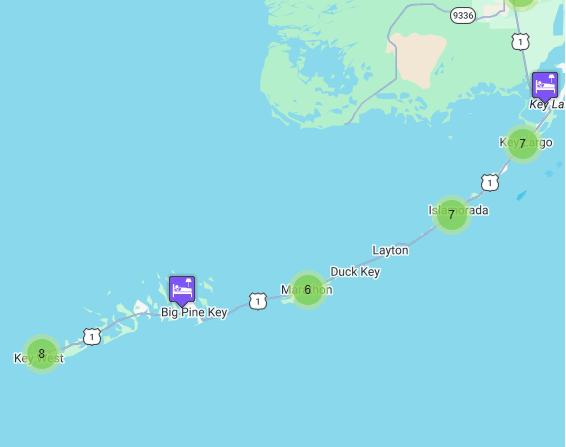
Map of Florida Keys Activities with Kids

3-Day Florida Keys Road Trip Itinerary
This 3-day itinerary highlights some of the best family-friendly stops in the Florida Keys, but it is just a starting point. There is more to see and do than you can fit into a single trip, and each visit can look a little different depending on your family’s pace and interests.
From beaches and marine life to small roadside stops and local attractions, the drive can be shaped to fit what your group enjoys most. Use this plan as a guide, then adjust it to create the right mix of activity and downtime for your trip.
Day 1: Key Largo to Islamorado to Marathon
Begin the drive in Key Largo and explore John Pennekamp Coral Reef State Park before heading south on the Overseas Highway. Stop in Islamorada at Robbie’s Marina to see the giant tarpon gathering along the docks. Continue toward Marathon and spend the afternoon visiting the Florida Keys Aquarium Encounters or relaxing at Sombrero Beach.
Day 2: Marathon to Big Pine Key to Key West
Continue through the Lower Keys and consider stopping at Bahia Honda State Park for one of the best beaches in the key chain. Watch for Key deer near Big Pine Key before completing the drive into Key West. Spend the afternoon exploring Duval Street, visiting the Ernest Hemingway Home, and finishing the evening at the sunset celebration at Mallory Square.
Day 3: Key West and Dry Tortugas
Spend the morning exploring Key West or take a ferry trip to Dry Tortugas National Park, located about 70 miles west of the key. The remote park features Fort Jefferson, clear snorkeling waters, and quiet beaches. After returning to Key West, begin the drive back toward mainland Florida or continue exploring the historic streets and waterfront.

10 Tips for Driving and Visiting the Overseas Highway
- The Overseas Highway has only one main route through the Keys, so traffic can occasionally slow the drive. Allow extra time and treat the journey as part of the experience rather than a strict schedule.
- The tropical sun can also be intense throughout the year. Pack sunscreen, hats, and plenty of water, especially if you plan to snorkel or spend time at the beach. Coral reefs are sensitive to chemicals found in some sunscreens. Use reef-friendly options to help protect this unique environment.
- Try to visit attractions on the right side of the highway. Left turns across traffic can be difficult during busy travel periods. You might want to split activities on the same key for the drive down or on the way back up.
- Plan your activities ahead of time. There’s so much to do along the route that it can feel like a long, multi-mile tourist trap. If you plan the activities with your family ahead of time, you have an excuse not to add in everything that sparks your kids’ FOMO along the drive.
- Summer in the Keys can bring heavy afternoon showers and thunderstorms. Plan outdoor activities for the morning and check weather updates throughout your trip.
- Some bridges may open for boat traffic, causing short delays. Check schedules for the Snake Creek Bridge (in Islamorada) and allow extra travel time.
- Law enforcement monitors the Overseas Highway closely. Speed limits change often, especially through small towns.
- Fuel Up in Advance. Gas stations between some keys can be sparse or crowded. Top off your tank before leaving the mainland or at major keys like Key Largo or Marathon to avoid fuel anxiety during your trip.
- Reserve Lodging Early. Accommodations, especially family-sized rooms or vacation rentals, fill up quickly during peak seasons and weekends. Book hotels or rentals well in advance.
- Key West is a popular cruise port, so downtown can become crowded with cruise ship passengers when ships are docked. If you’re planning to explore the area, consider timing your visit in the early morning or late afternoon when it’s less busy. For a unique experience, grab a seat downtown to people-watch and enjoy the views as cruise ships depart, especially before the lively sunset celebrations begin.
Adventure Tours and Activities in the Florida Keys
Expand your itinerary by adding the following adventure tours and cruise options. Book your activities before you go for smooth trip planning.
- Sunset Sailing Cruises
- CraigCat Eco Tours
- Sandbar Boat Tours
- Reef Diving Tours
- Snorkeling Tours
- Fishing Charters
Where to Stay with a Big Family in the Florida Keys
Hotels: Find hotels in the Florida Keys for your big family. We’ve researched the area to find spacious suites, family rooms, and multi-bedroom options that sleep your big family of 5-8 guests in one room. Explore by map or by key.
Vacation Rentals: Use Whimstay to stop overpaying for vacation rentals.
Search both hotels and vacation rentals with Booking.com below.
